 Levain Craft
Levain Craft
Levain Craft
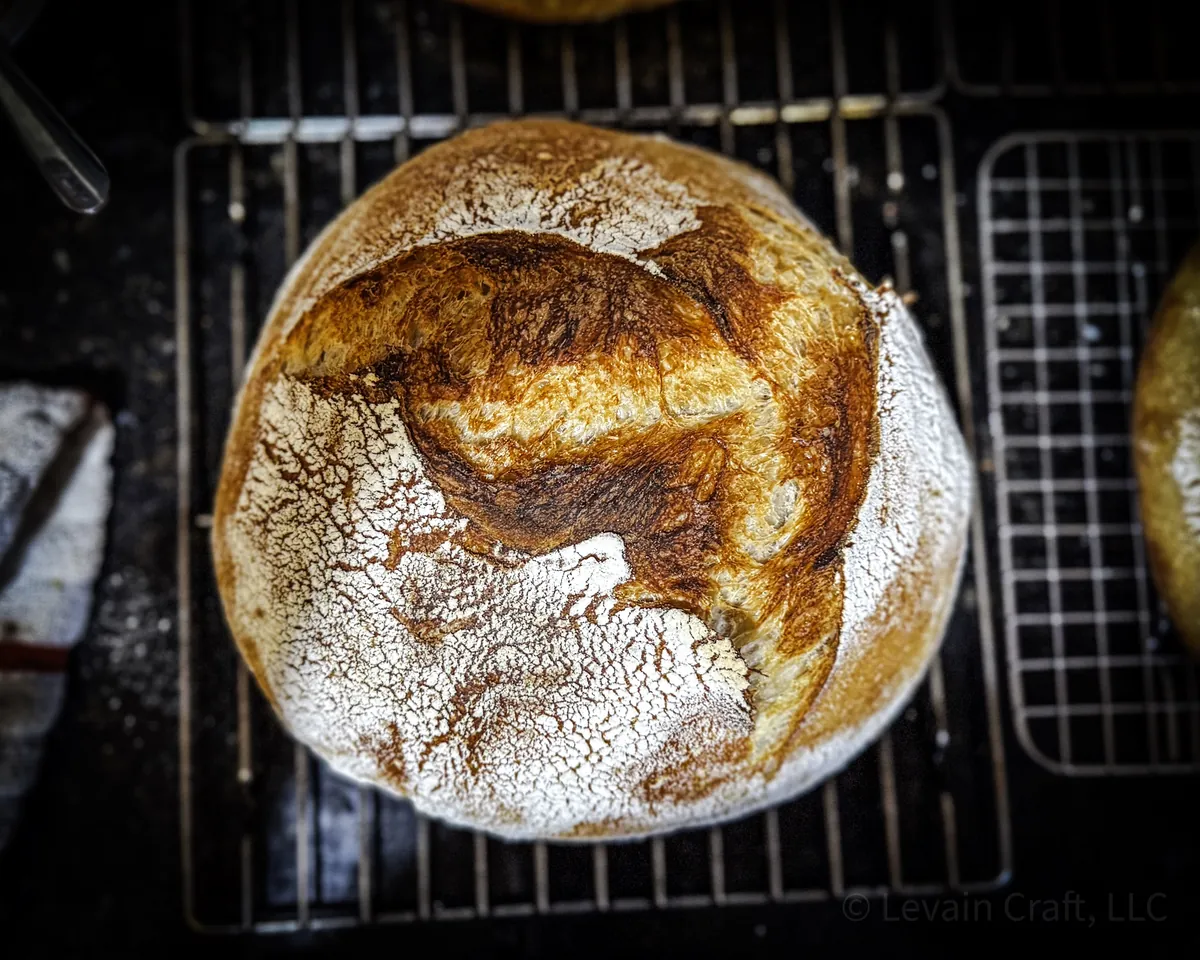
Levain Craft bakes the traditional breads of the world's home kitchens — slowly fermented, simply made, from little more than flour, water, salt, and time.
The world's greatest foods were never invented by corporations. They came from villages. From monasteries. From family kitchens that fed the same table for generations. We bake to keep those foods alive.
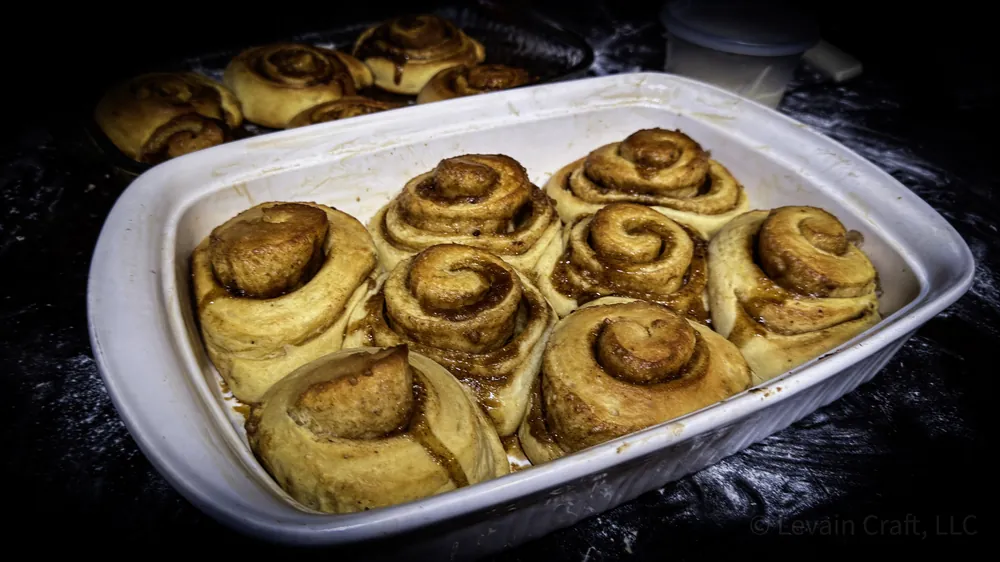
In the French countryside it was a big round loaf, baked once a week and sliced until the next one. In Japan it became a soft, tall white bread whose corners fit the toaster exactly. On the Ligurian coast, olive oil and salt turned flatbread into something worth crossing town for. Scandinavian kitchens rolled cinnamon and butter into soft spirals for coffee hour. England griddled little rounds of dough for breakfast.
None of these began as delicacies. They were made by ordinary people from ordinary ingredients, over and over, until the ordinary became extraordinary. That lineage is what we bake from — and the map keeps growing.
The list grows slowly, on purpose.
Flour. Water. Salt. Time.
Our leaven has no brand name. It's a jar of flour and water that has been alive longer than most sourdough trends, and it raises every loaf we bake. Butter is butter — the kind with one ingredient. Flour is unbleached and unbromated — and the search for flours made even more simply never really ends.
Batches stay small because attention doesn't scale. Loaves are shaped by hand because hands can feel what a machine can't. And everything waits as long as it needs to, because fermentation keeps farmer's hours, not ours. We don't say any of this to romanticize the work. It's simply how these foods were always made — and why they taste the way they do.
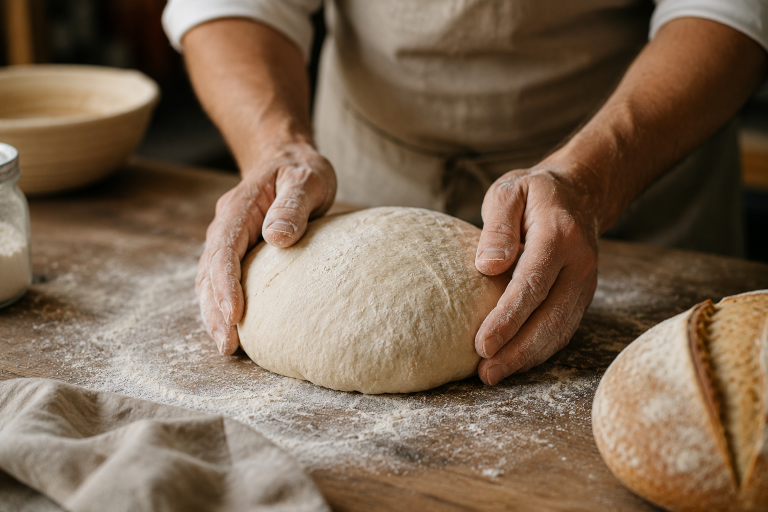
Industrial bread rises in two hours because additives force it to. Ours takes the long way. The levain wakes in the morning, the dough develops through the day, and the shaped loaves rest overnight in the cold, trading speed for flavor the whole time.
There are no preservatives, so there's nothing keeping the bread but its own crust — which is exactly how it should be. Production stays small, availability is limited, and no two loaves come out quite alike. We consider all three of those features.
A storefront needs volume, and volume is where small bakeries lose their way. So instead of asking you to come to the bread, we bring the bread to where life already happens.
Every Monday morning, fresh bread arrives at a small number of participating workplaces around Tampa Bay. Reserve online during the week; your order is baked that same morning and waiting when you get to work. A farm share, in bread form — and a better reason than most to look forward to Monday.
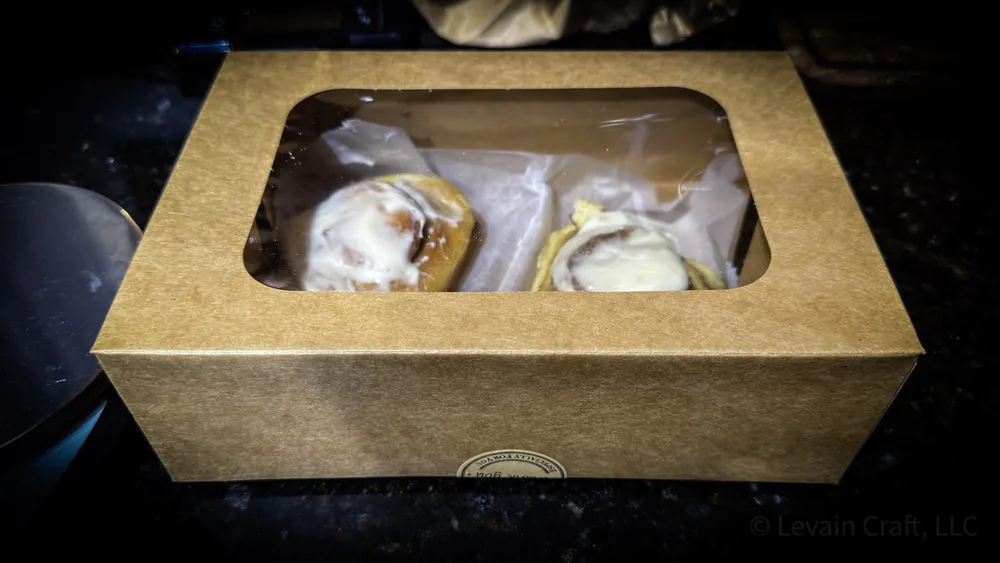
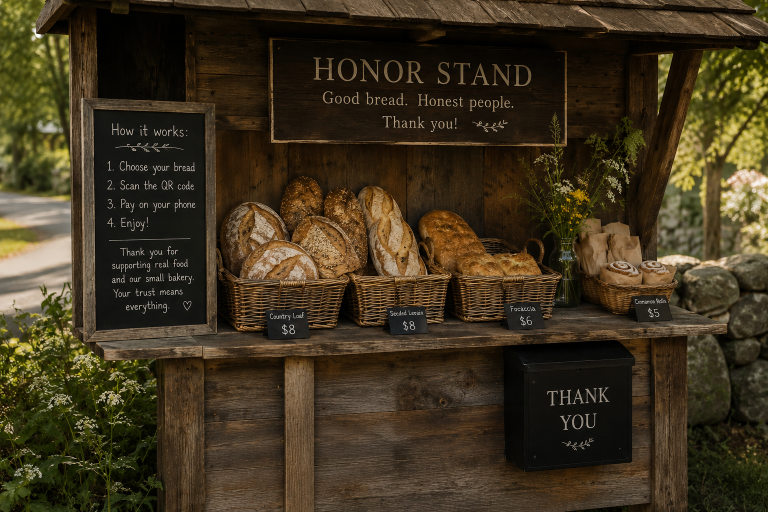
A small stand of fresh bread, and nobody watching it. Choose what you'd like, scan the code on its label, pay on your phone, and walk away. No line, no register, no cash box. It runs entirely on trust — and in a world of turnstiles and checkout flows, being trusted turns out to be the rarest convenience of all.
Now and then we set up a table — a neighborhood market, a local event, a holiday weekend. Seasonal bakes in small quantities, announced quietly, gone early.
Office catering, gatherings, corporate gifts, holiday baking. Write to us with the occasion and the date; we'll reply with what the oven can do.
If any of this sounds like your kind of Monday, the week's bake is open for reservations now.